On this page
- What is Tana Beru?
- What did UNESCO actually list?
- Where else are boats built around Bira?
- Is Tanah Lemo the biggest boatbuilding centre?
- How do you get there from Bira?
- Is there a fee or a guide?
- How should you behave at the Tana Beru boatyards?
- Who are the panrita lopi and sawi?
- Are the old origin stories history?
- What else should you know about the Tana Beru boatyards?
- Which sources support this page?
- How do I reach the desk?
By Bira Sulawesi Editorial Desk
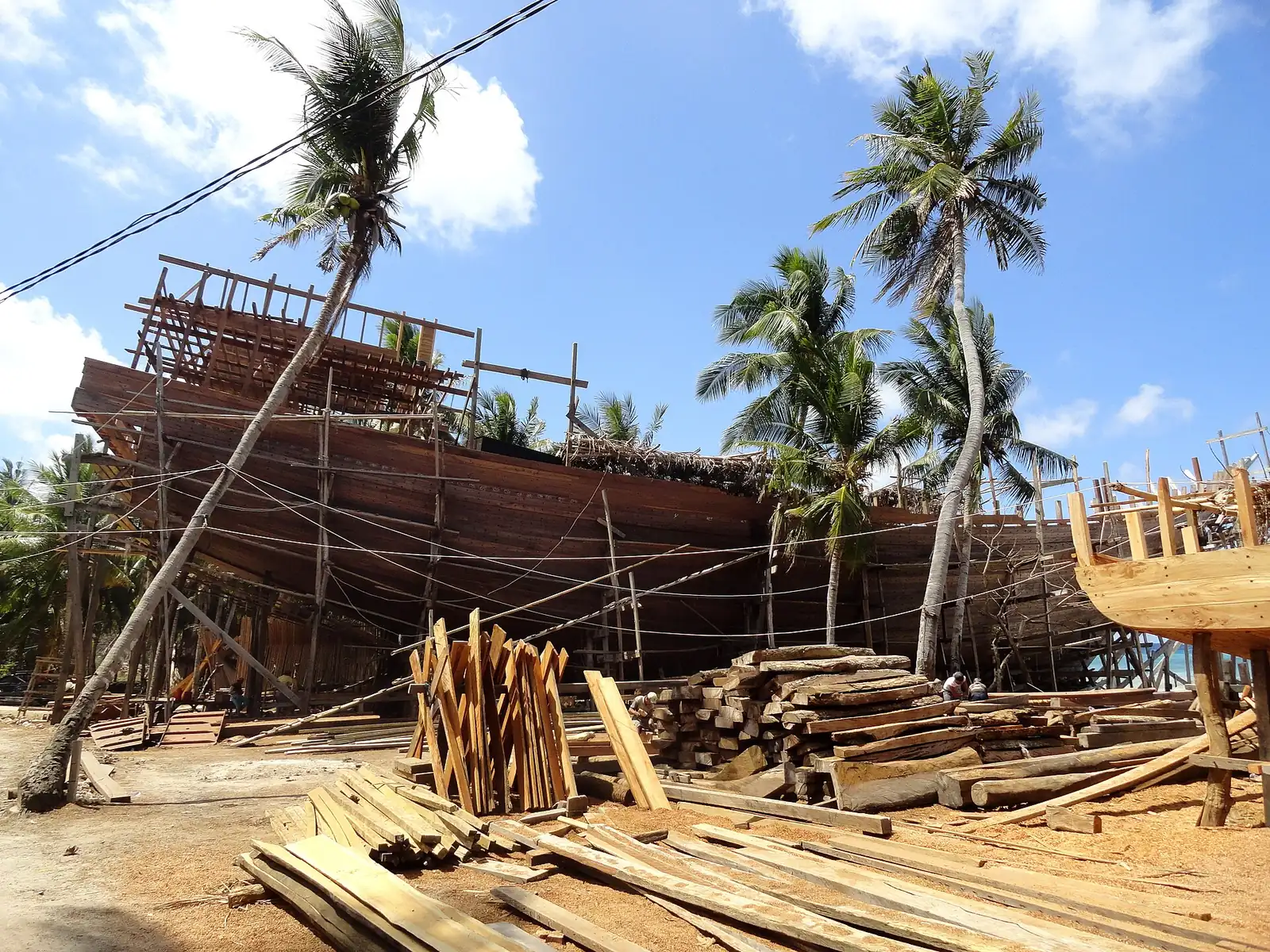
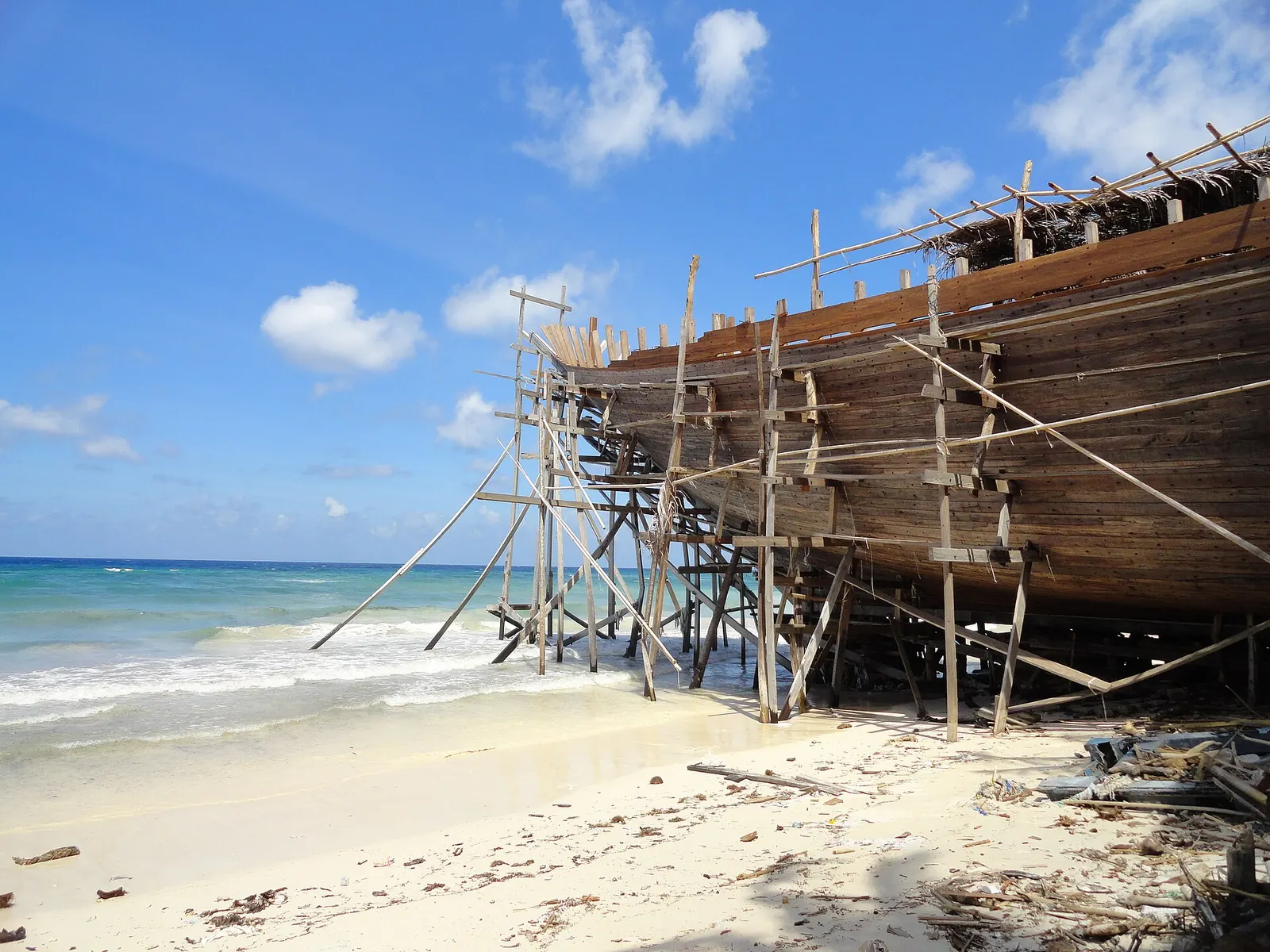
The Tana Beru boatyards are working places with no ticket office, and whether you can watch a pinisi hull being built depends on permission and on what is under way. Seascapes, a Bira resort, puts them 20 to 30 minutes from Bira by road and says there is no charge; a tour seller says twenty minutes. Ask permission, ask before photographing anyone, and stay clear of the spars.
What is Tana Beru?
Tana Beru is one of the boatbuilding centres of Bonto Bahari district, on the road between Bulukumba town and Tanjung Bira. One resort's route list for the drive from Makassar runs Bulukumba, Tanaberu, Tanjung Bira, so the overland route passes it on the way in. The spelling varies, and Tana Beru, Tanaberu and Tanah Beru all turn up. The encyclopedia entry on neighbouring Ara says the district was first called Tanah Bale, a merger of the old districts of Tanah Beru, Bira, Ara and Lemo-lemo, and took its present name after a 1967 proposal. That is why the yards, villages and beaches you may treat as separate stops share one administrative home.
Boatbuilding is also the regency's public identity. Bulukumba is nicknamed Bumi Panrita Lopi, panrita lopi meaning master boatbuilder, and its motto is Bulukumba Berlayar. This page covers the yards purely as a visit: how to get there and how to watch without getting in the way. It has nothing on commissioning or buying a boat. For the rest of the trip, see the Bira Sulawesi overview.
One caution on maps. The coordinates published for Bonto Bahari, 5°31′31″S 120°21′35″E, mark the district and not a yard. Nobody publishes a yard address, so ask your host or driver which yard has a hull in progress that week.
What did UNESCO actually list?
UNESCO inscribed "Pinisi, art of boatbuilding in South Sulawesi" on its Representative List in 2017, at session 12.COM. The inscription covers a craft. Neither Bira nor Tana Beru is a World Heritage Site, and any brochure saying so has confused two different lists.
The entry gives a visitor three useful points. Pinisi refers to the rig and sail of the Sulawesi schooner, so the word describes how a finished boat is rigged more than the hull you will see on the stocks. UNESCO names Tana Beru, Bira and Batu Licin as centres of the craft, and Batu Licin is in Kalimantan, so the tradition does not stop at this cape. It also says about 70 per cent of the population in those centres make a living from work related to boatbuilding and navigation, and that knowledge passes within families and to others through the division of labour. The yard you walk into is somebody's income and often their family's training ground.
Where else are boats built around Bira?
Tana Beru is one of several places to see this work, and the nearest yard may be closer than you expect. Each row below is a claim by the named source and none is a count of ours.
| Place | What is reported | Who says so |
|---|---|---|
| Tana Beru | 20 to 30 minutes back towards Bulukumba; working yards, no charge | Seascapes (resort) |
| Tana Beru | Twenty minutes by car; no formal entry or ticket booth | Sulawesi.com (tour seller) |
| Kampongpasar | About 15 km from Bira; usually more than twenty boats under construction; mornings are best | Seascapes (resort) |
| Panrang Luhu | A pinisi yard at the north end of a beach of about 1.5 km, with Bira port at the south end | Jadesta (tourism ministry platform) |
| Ara | Being developed as a tourism village linked to the pinisi tradition | Indonesia Travel (national tourism site) |
Treat the Kampongpasar figure as one operator's description, since the number on the stocks will rise and fall with orders. If you are staying on the eastern side, the yard at Panrang Luhu Beach is on the same stretch of sand as the port, which makes it the least effort of the group.
Ara needs a little more thought because it is a lived-in village. Its centre is given at 5°32′05″S 120°25′18″E, and the same entry says most residents are Muslim and of Makassar-Konjo ethnicity, speaking the Konjo dialect of Makassar. That describes Ara and is not a survey of the whole cape, and our own suggestion is modest dress in any of these communities. A local outlet lists Tebing Apparalang, Pantai Mandala Ria and Gua Passohara among Ara's attractions, so ask a driver whether a morning near the boats can pair with the Apparalang cliffs.
Is Tanah Lemo the biggest boatbuilding centre?
One source says so, and it gives no numbers. Live the World calls Tanah Lemo the largest pinisi-making centre in Indonesia. No other source on this page repeats that rank. Journey Beyond Horizon also counts more than 20 boats at Kampongpasar, matching the Seascapes figure above, and reports another construction site at Mandala Beach on the east coast. Round the World in 30 Days describes a 15-minute drive to Marumasa, just outside Bira, with three ships in progress during a 2014 visit.
These names overlap, and no source here maps them against each other, so ask your driver which yards are busy and how far each one is. Live the World adds a detail worth setting beside the brochure lines: portable electric tools such as disk saws are already in use at these hand-built hulls.
How do you get there from Bira?
By road. The two travel times in the table come from two businesses, and neither gives a distance, so read them as estimates. Sulawesi.com, which also sells car hire, says the last hour between Bulukumba and Bira runs through limestone country and is slower than map estimates, so add a margin to whatever your phone shows. Seascapes reports no ride-hailing on the peninsula, which means you should settle the return leg before you leave, whether with a driver or on a rented motorbike.
The yards can also be a stop on arrival. One agency guide puts Tana Beru 176 km from Makassar, and our Makassar to Bira page sets out how sources differ on the drive itself. Before adding a stop, look at the clock: Seascapes advises first-timers to avoid the last stretch after dark, describing the final 40 km as narrower with tight bends.
Is there a fee or a guide?
Two sellers agree there is no formal fee. Seascapes says there is no charge and that a small tip is right, without naming an amount. Sulawesi.com says there is no formal entry or ticket booth. Neither statement is an official notice, so if a local asks for a contribution on the day, treat it as a normal request and ask what it covers.
Nothing published makes a guide a requirement. The national tourism site does say visits should follow local rules and permission, and that is the real reason to bring someone along. If you have no Indonesian, a driver or host who can ask on your behalf makes the first conversation much easier.
How should you behave at the Tana Beru boatyards?
Treat the yard as a construction site where you are there by permission. The first three points below come from the sources cited above. The rest are our editorial advice for any working site.
- Ask first. Find whoever is leading the work and ask whether you may watch.
- Ask before photographing people. Seascapes names this specifically, along with the small tip.
- Stay clear of the spars. Sulawesi.com asks this of visitors, and it applies to any timber being moved.
- Dress for the ground. Closed shoes suit a site with offcuts and tools underfoot, and sandals do not.
- Keep children within reach. Do not count on barriers around the work.
- Stay off the hull and scaffolding unless a builder invites you up.
- Keep it short. If the crew is busy, watch for a while and leave them to it.
Who are the panrita lopi and sawi?
The national tourism site names panrita lopi as the leading master builder and sawi as the workers. Knowing the two words helps, because it tells you who to approach for permission and who is simply busy with the job in hand. Good questions are small ones: what stage this hull has reached, which village the crew comes from, how long this phase takes. Questions about price are the wrong ones for a casual visit.
The moment worth knowing about is annyorong lopi, the procession of moving a newly built pinisi from yard to sea, done together by residents. We know of no public launch calendar, so a launch is luck unless it falls inside a festival programme. RRI reported Festival Pinisi XVI on 15 to 17 October 2026, and our Festival Pinisi guide explains why those dates cannot be carried forward.
Are the old origin stories history?
Treat them as legend. You may hear a story placing the first pinisi in the 14th century, and it belongs to folklore. The more cautious written account comes from Wikipedia, which says the first Sulawesi pinisi is thought to have been built in 1906 by shipbuilders of Ara and Lemo-Lemo for a Bira skipper. Note the words "is thought to".
The same care applies to modern claims. One travel agency says about fifty boats leave Tana Beru each year, built without plans, nails, screws or bolts. It gives no method for the count, so treat both as the agency's claims. Ask a builder what fastenings are going into the hull in front of you.
What else should you know about the Tana Beru boatyards?
How far is Tana Beru from Tanjung Bira?
Seascapes, a Bira resort, says 20 to 30 minutes by road back towards Bulukumba. Sulawesi.com, a tour seller, says twenty minutes by car. Neither gives a distance, so allow extra time on the road.
Can you visit the Tana Beru boatyards?
Seascapes and a tour seller describe working places with no fee or ticket booth, and the national tourism site says visits should follow local rules and permission. Nobody can promise that a particular hull will be under active work on your day.
Do I need a guide for the Tana Beru boatyards?
Nothing published makes one a requirement. Someone who can ask permission in Indonesian is still a real help if you do not speak it, and a driver or host can often fill that role.
Is there an entrance fee at Tana Beru?
Seascapes reports no charge and suggests a small tip. Sulawesi.com reports no formal entry or ticket booth. Both are businesses and neither statement is an official notice.
Is Tana Beru a UNESCO World Heritage Site?
No. UNESCO inscribed the art of pinisi boatbuilding on its Representative List in 2017. That listing covers a craft, and no place was inscribed.
Which sources support this page?
- UNESCO: Pinisi, art of boatbuilding in South Sulawesi
- Indonesia Travel: Pinisi
- Seascapes: Tanjung Bira guide (resort)
- Seascapes: location guide (resort)
- Sulawesi.com: Bira, what it does well (tour seller)
- Indonesia-Travel.com: Tana Beru (travel agency)
- Wikipedia: Pinisi
- Wikipedia (Indonesian): Ara, Bonto Bahari
- Wikipedia (Indonesian): Kabupaten Bulukumba
- Wikipedia (Indonesian): Bonto Bahari
- Jadesta (tourism ministry): Pantai Panrang Luhu
- Pedoman Karya: Desa Ara, May 2024
- Rubrik: Festival Pinisi XVI, September 2026
- RRI: Festival Pinisi 2026 opening
- Live the World: Tanjung Bira, November 2022 (travel site)
- Journey Beyond Horizon: Tanjung Bira guide, September 2025, updated May 2026 (travel blog)
- Round the World in 30 Days: Bira, 2014, updated 2024 (personal travel blog)
How do I reach the desk?
For help planning a morning around the yards, write to the desk on WhatsApp at +62 811-3941-4563 or by email at bd@juaraholding.com. Give your dates in Bira, whether you arrive from Makassar that day and how many people are travelling. The desk answers questions and does not control access to any yard. Requests can lead to a paid booking, so we have a commercial interest, and only a written offer naming the price and contracting company binds anyone.
Send the desk your dates, group size, and what you want to do. The desk replies in writing.
Ask the desk on WhatsApp bd@juaraholding.com